Walkable Denver
How Walkability Can Solve Denver's Affordability Problem
Whether mixed-use residential developments, affordable housing, or more niche multifamily housing like senior living, quality designed projects have the opportunity to positively transform areas in Denver.
One of the most exciting redevelopments happening in Denver is the Colfax corridor. Touted as the longest commercial street in America, it has a storied history and the opportunity to reinvent Denver’s approach to urban planning.
With the introduction of Bus Rapid Transit (BRT) and a different approach to urban planning, Colfax could become a model for restoring Main Street, USA through sustainable development, affordable housing, and maintaining eclectic commercial spaces.
Rather than treating car traffic as the central driver of Colfax, Walkable Denver treats it as a part of a broader system in activating the urban corridor.
Walkable Denver is a project to provide a framework for a habitable, inclusive amenity for Denver. Rather than focusing on car throughput by the street, the streetscape is drawn from the current creative energy of the city and ideas from the past. This mixed with the incorporation of new approaches tailored for the community can provide an enduring asset for the local community and the city.
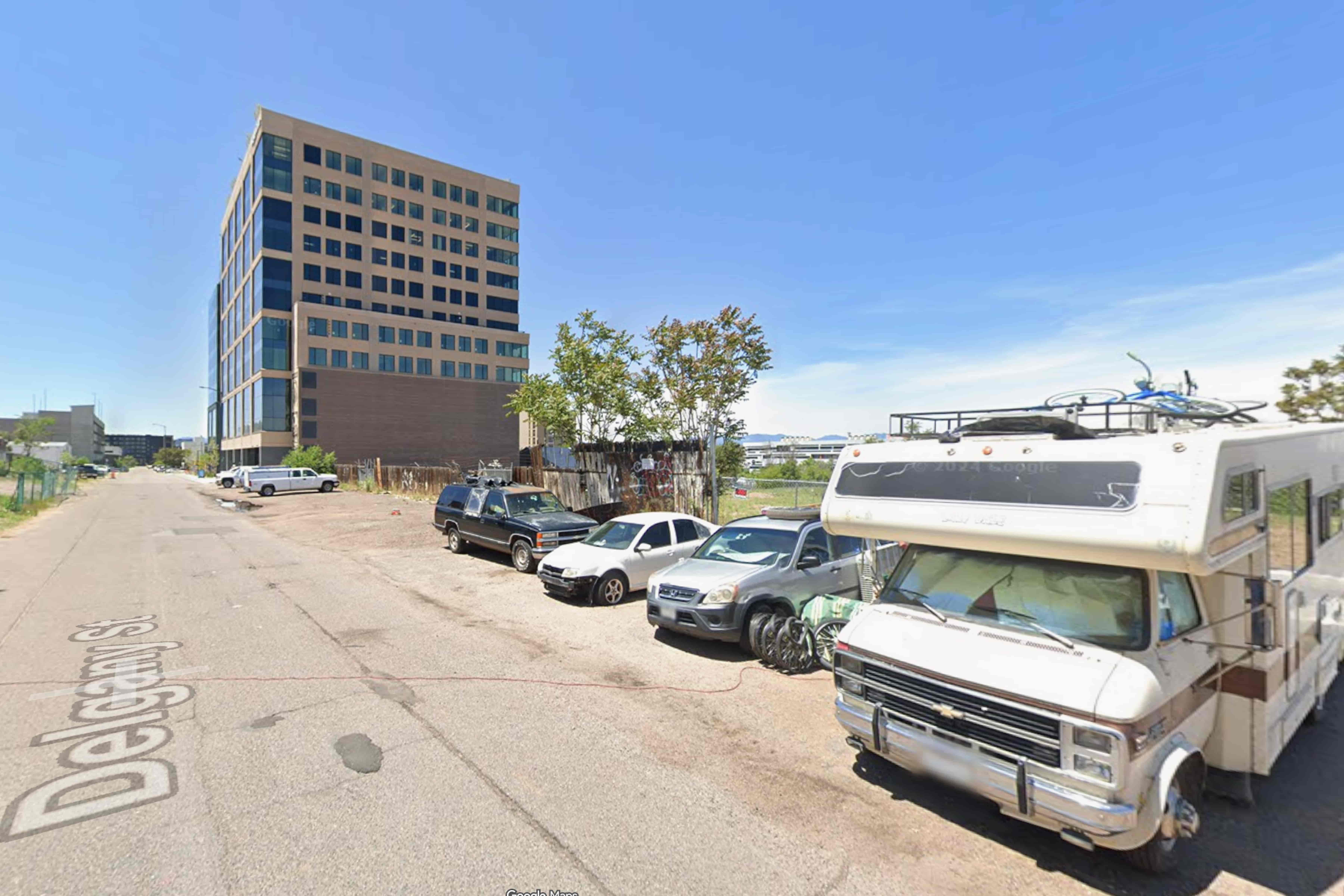
East Colfax has been a street of small storefronts, hotels, bars, restaurants, neon signs and constant motion that has segued into being replaced by segmented small franchise islands. Instead of discovering cool vintage goods or dive bars, the street loses all interest with places like McDonalds and Taco Bell set within parking lot heat islands.
A Continuous Street Wall
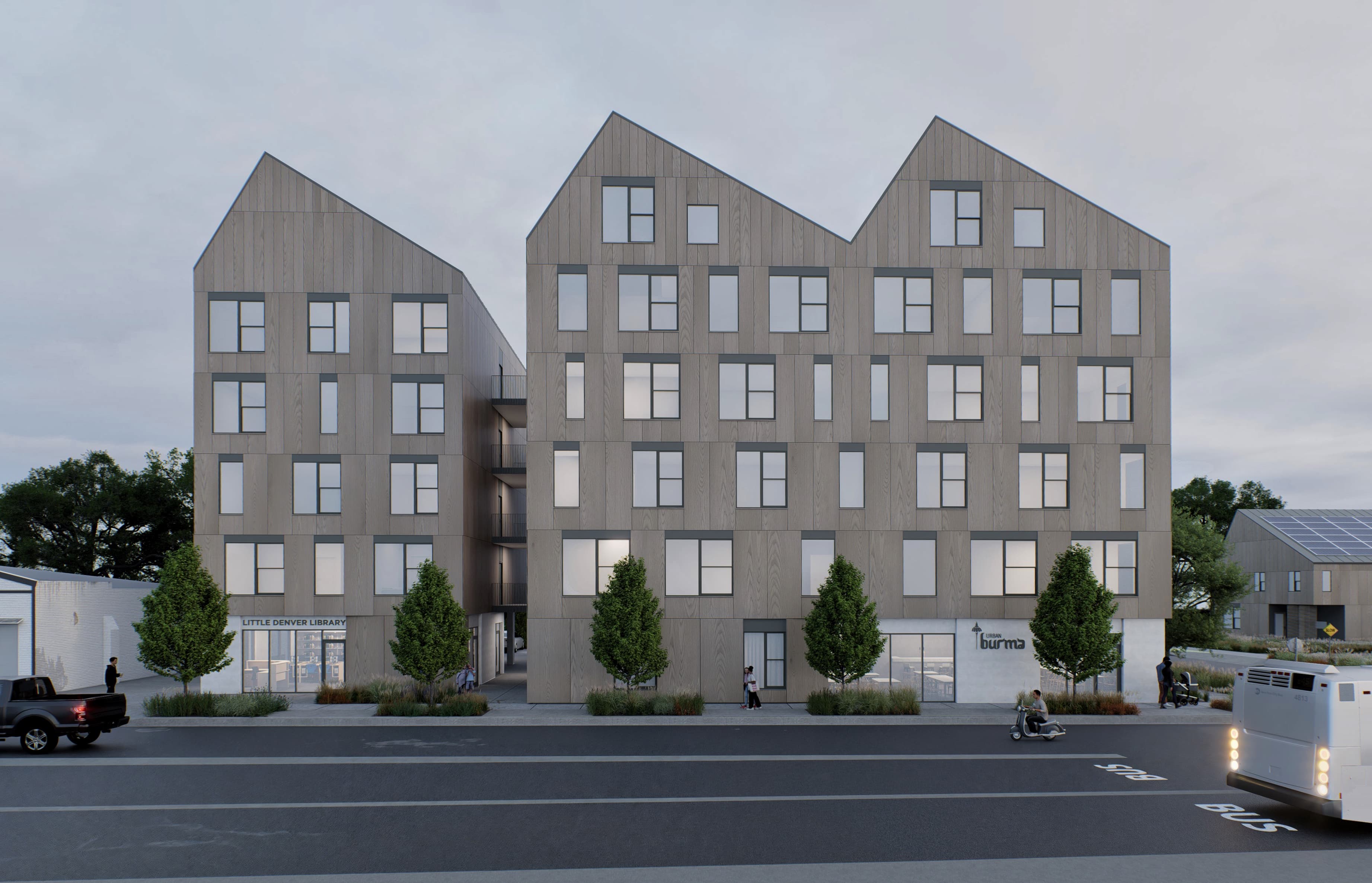
Central to the design strategy are continuous, slightly articulating facades that run the length of the block, reinforcing the Main Street ethos.
Parking is tucked to the rear of the site, accessed from alleys, so cars never interrupt the sidewalk experience. Pushing the parking to the rear allows for there to be a buffer from the residential areas off Colfax.
As buildings hold the street edge, plantings play an important role in the reimagination of Colfax. Trees increase shade and create a microclimate to make warm summer days habitable. Coloradoscaping the buffer between the sidewalk and the street adds beauty and resilience.
Micro-Commercial Spaces by Locals for Locals
On the street, buildings are broken into a series of small commercial spaces that bookend either side of the property. Having small, leasable units provide an opportunity for community, culture, and activity.
This allows for independent restaurateurs, artists, performers, makers, collectors a low stakes opportunity to test out ideas and create innovative ideas.
Bus Rapid Transit
With the frequency of BRT stops, East Colfax has the ability to increase density to ensure that the rapid bus transit is a success.
There should be a focus on encouraging desirable places along Colfax to provide a broader demand for the transit line. Emphasis should be on creating shaded, habitable sidewalks to enhance the connection between the rapid transit stations and destinations.
Bike and scooter parking should not be an afterthought. Combining ease of transit, biking, and walking, there can be an effective strategy to greatly reduce vehicle parking demand and support effortless car-light living along the corridor.
Affordability by Design
A significant share of the units added should be designated as affordable housing, reflecting Denver's urgent need for affordable housing along its transit corridors.
Colfax provides an ideal location for affordable housing. Located on the transit corridor are opportunities for employment, a range of grocery stores, and near one of Denver’s best parks.
Unit types need to range from studios to family-sized three-bedrooms, allowing a diverse population to live along the East Colfax corridor.
Resilient Streetscape
Sustainability is embedded in the site's infrastructure in addition to the architecture.
With the heat island effect brought on by all of the hardscaping Colfax, planting coloradoscaped greenspaces is important to allow anything organic on the corridor thrive. The dry, hot conditions are great for native species.
A balance of trees are also needed to provide shade and habitability to the sidewalks. Irrigation should be set up to provide enough watering to get the trees established without overwatering the native perennial plantings.
Space should be made for seating nooks, public art and lighting calibrated for pedestrian comfort at night.
A Model for America’s Aging Corridors
Like many post-war main streets that have evolved into high speed stroads, this strategy of giving back the road to the community can be a model for other cities.
Building a major transit infrastructure is a major step but not leveraging the investment to its full potential might end up with transit not having the ridership to be sustainable.
As Denver densifies, the current strategy focuses on displacing people and culture for dystopian grey boxes. This project seeks to provide opportunities to local community members with more, smaller buildings to create a blank canvas of affordable options for businesses and housing.