Process: Home Additions & Renovations
A home addition should be about more than just adding square footage. It is an opportunity to reassess how your home functions and how you experience your daily life.
Adding on to a home is one of the most complex undertakings a homeowner can navigate. With a new build, the options are unlimited, working with existing constraints takes skill and expertise.
Expanding a footprint requires a seamless blend of structural engineering, zoning compliance, and aesthetic consideration.
The goal is to ensure the new space is cohesive with the existing space whether it looks like a natural evolution of the original architecture or a tasteful distinct addition.
Simply spending a lot of money doesn't guarantee a cohesive result.
If you are looking for help crafting an elegant, artful addition that enhances both your lifestyle and your property value, reach out to schedule a free consultation.
Home Addition Design Experience
Most people only experience building or renovations a few times in their life. With that limited exposure, having expertise is important to getting the best results.
The process involves navigating the world of structure, roofline transitions, and updated MEP (mechanical, electrical, and plumbing) systems and can be complex and overwhelming.
Throughout my career, I’ve designed a range of residential additions ranging from clever bedroom suite bump-outs to kitchen expansions to ADUs that have included expansive multi-story additions in cities with some of the hardest constraints on adding space.
Why You Need a Designer for an Addition
An addition is a major investment. Whether you are creating space for a growing family or finally building that room that you’ve always dreamed of, professional design ensures the project is feasible, built right, and beautiful.
Great additions are difficult, having someone that knows how to work within the existing constraints and get amazing results is paramount to not regretting spending a lot of money on something that doesn’t work.
The Growing Family | The Lifestyle Upgrade |
Your home is perfect, but you’ve outgrown the footprint. You need to add bedrooms, a nursery, or a dedicated playroom to keep your family comfortable without the stress of moving. | You love your neighborhood but lack the luxury of a home office, a private gym, or a primary suite wing. You want to transform your current house into your forever home. |
What to Look For in a Designer for an Addition
Finding the right designer for building an expansion is a high-stakes task. Unlike a simple interior refresh, an addition alters the very skeleton of your home. You need someone who understands both the visual and invisible underpinnings of an addition.
You’ll find options ranging from drafting services that provide basic blueprints to design-build firms that may prioritize construction speed and profit over architectural integrity.
Ultimately, it comes down to ensuring you get a quality return on one of the largest financial investments you will ever make in your property.
The following fundamentals should be non-negotiable when choosing a designer:
Addition Fundamentals
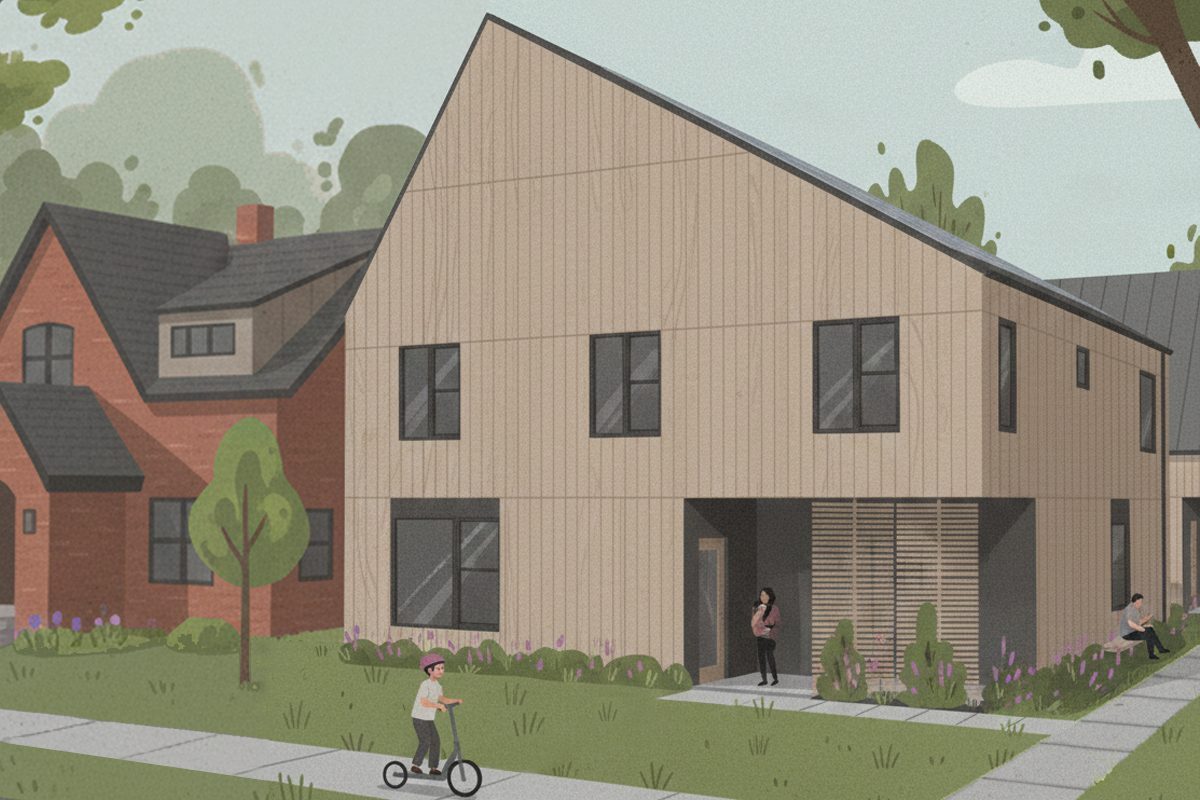
- Architectural Integration: Ensuring the new rooflines, siding, and windows match or complement the existing structure so the addition feels intentional, not attached.
- Site & Zoning Analysis: Navigating local building codes, easement restrictions, and lot coverage maximums to ensure your project is actually buildable before you break ground.
- Flow & Circulation: Defining the relationship between the old and the new. Special attention needs to be paid towards how people move through the house, ensuring the transition between spaces feels natural and intuitive.
A Collaborative Design Process
The most successful additions are born from a partnership between your lifestyle needs and our technical expertise.
Phase | What We Deliver | Your Benefit |
1. Discovery | Feasibility study, zoning check, & site measurements | Confidence that your vision works within the constraints |
2. Conceptualization | Massing studies and 3D exterior renderings | Visualize how the addition sits on your lot and fits with your existing home. |
3. Technical Design | Detailed structural, electrical, and HVAC integration drawings | A thorough set of drawings that gives contractors and officials total clarity. |
4. Material Curation | Selection of matching or complementary exterior and interior finishes | A cohesive aesthetic that blends the new space with the original home. |
Key Design Elements
- Thought Through Transitions: Special attention needs to be paid towards how floors meet, making sure that the transition is as seamless as possible. Close attention to ceiling heights and trim profiles so the threshold between the original home does not look like an afterthought.
- Natural Light: Strategically placing windows and skylights to ensure the new interior doesn't feel like a cave and that the original rooms still receive ample light.
- Modern Envelope: Priority towards high-performance insulation, having no thermal bridging, and energy-efficient windows to ensure your new space is comfortable year-round.
Let’s Build Something Beautiful
A home addition is a significant investment in your future and your daily comfort. Don’t settle for a tacked on attached to your house. Let’s design a space that feels like it was always meant to be there.